


- Home
 Software Releases
- New Release: Debian Buster v1.3 for the VAR-SOM-MX8X modules
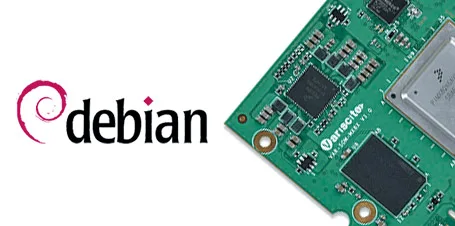
Release date: 3/16/2020
Variscite is pleased to inform about the Debian Buster release v1.3 for the VAR-SOM-MX8X System on Module
Modules: VAR-SOM-MX8X
Release: imx8qxp-var-som-debian-recovery-sd.v13
Details:
- Filesystem:
Debian Buster - Linux kernel:
Variscite imx_4.14.98_1.0.0_ga_var01 release (based on official NXP release imx_4.14.98_1.0.0_ga, which is based on Linux 4.14.98). - U-Boot:
Variscite imx_v2019.04_4.19.35_1.1.0-var01 release (based on official NXP release imx_v2019.04_4.19.35_1.1.0, which is based on U-Boot v2019.04).
Noteworthy updates:
Release v1.3
- Linux kernel: MLK-23408: ASoC: fsl_amix: make clock and output src write only (Fixes alsactl store/restore sequence)
- MLK-22025-1, MLK-22307, MLK-22280-2, MLK-22280-1, MLK-21928, MLK-15984 (usb: chipidea bug fixes)
- Linux kernel: Display sn65dsi83: Add dual channel support
- U-Boot: Add SPL support
- CFW & U-Boot: Read DRAM configuration from EEPROM
Release v1.2
- Linux kernel: Added Docker support
- Linux kernel: Added support for OV5640 parallel CSI sensor
- Set the MAC address also for the 2nd Ethernet interface
- U-Boot: Added flexibility to mmc part selection
- Added rng-tools
- Disabled the hostapd service by default (as wpa_supplicant is running)
Release v1.1
- Use legacy iptables by default
- Bluetooth audio support
- Automount media support
- Power management fixes
Release v1.0
- Initial Debian Buster release
External Information
Developers info

Sign up for our newsletter


 Join RSS Feed
Latest Posts
Software releases
Stay current with software updates – Keep your Variscite SoMs performing at their best with our latest software releases.

Newsroom
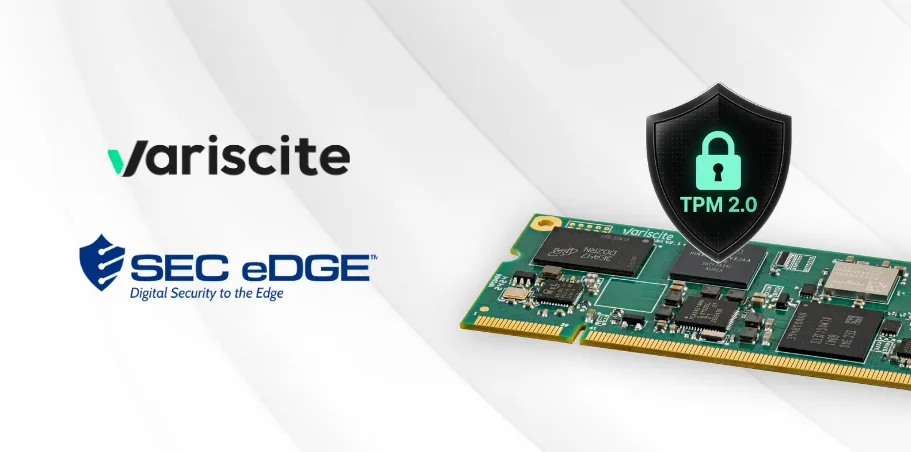
Adding TPM 2.0 to an embedded product usually starts with a hardware question: where does the security chip go? On Variscite’s i.MX-based modules, there is now another answer. Variscite and SecEdge are bringing SecEdge’s TPM 2.0 firmware, anchored in the processor’s own security hardware, to Variscite’s i.MX System on Module portfolio.
Blog
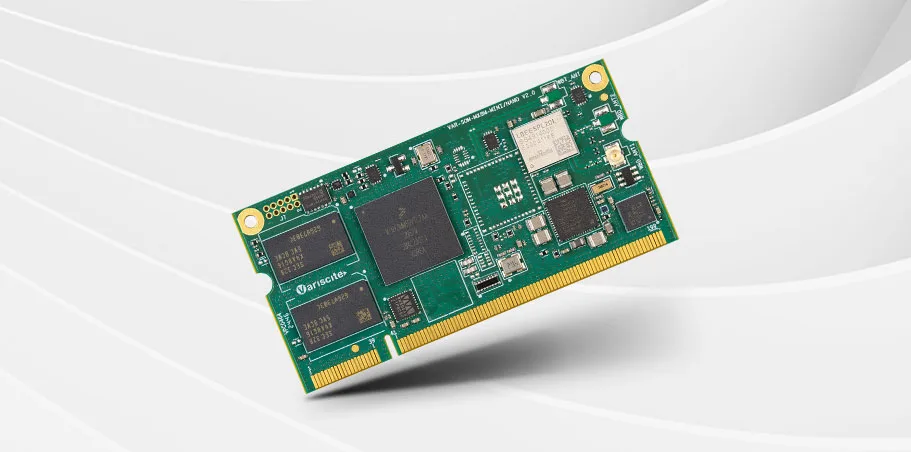
Pierluigi Passaro, Variscite’s R&D expert, introduces the VAR-SOM-MX8M-MINI and the VAR-SOM-MX8M-NANO – two cost-optimized modules designed for applications that require power-efficient processing, graphics capabilities, and real-time performance. Both SoMs are available with flexible memory, storage, and wireless configurations, allowing developers to pay only for the features they need.
