



Supply Chain Resilience for Embedded Developers: Insights From Variscite's CEO
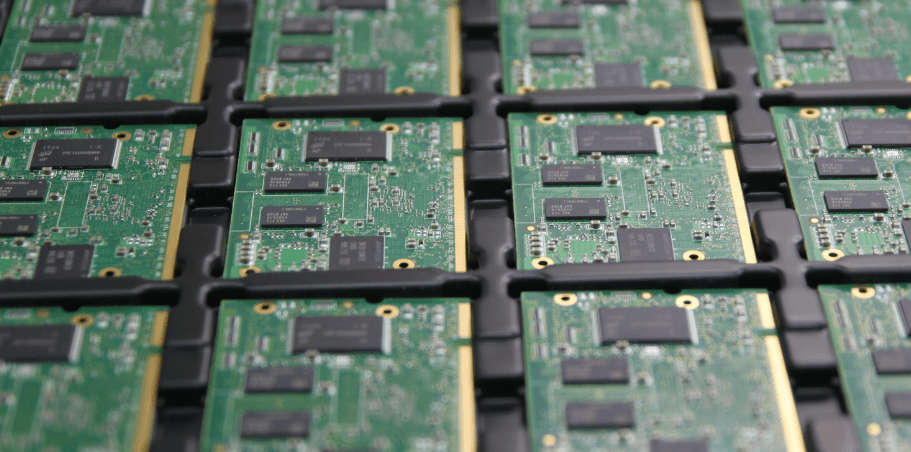
The global component crisis is forcing embedded teams to confront an uncomfortable reality: not all SoM vendors are equally equipped to weather it. In the latest episode of the Embedded Executive Podcast, Variscite CEO Ohad Yaniv joined Rich Nass of Embedded Computing Design to discuss what it takes to keep customer projects on schedule when supplies are under sustained pressure and why the answer starts with who controls your manufacturing. Unlike vendors who rely on subcontractors, Variscite designs and manufactures its entire System on Module portfolio in-house, with production fully certified to ISO 9001, 13485, and 27001 standards.
Here are a few conversation highlights:
Rich: Before we start, let’s give the audience a quick introduction to Variscite.
Ohad: Variscite is a leading System on Module vendor. We’ve been doing this for over 20 years, releasing two to three new products every year across an ever-expanding portfolio.
We have R&D and support teams in our headquarters, as well as in Italy, Brazil, Germany, and the US. We try to stay as close as possible to our customers, supporting them in their own language and time zone, wherever they’re located.
We have a large customer base, particularly medical devices manufacturers, which is one of the main reasons we certified our entire operations to ISO 13485 – ensuring traceability, 100% functional testing on all units, and everything our customers need to support FDA certification.
Rich: The last 12 months in particular have been rough – the memory space, the AI and data center boom, geopolitical pressures. What are the real obstacles, and how do companies avoid them?
Ohad: It started with LPDDR4 and LPDDR5 allocation issues, then eMMC and flash joined the crisis, then DDR3 and DDR2. Right now, practically every RAM and flash component is under allocation. We’re even seeing PCB constraints because of specific elements used in the production process. It’s one crisis on top of another.
This is where 20 years in the market makes a real difference. We’ve built solid, long-standing relationships with suppliers like Micron, Winbond, Kingston, and SanDisk. Variscite orders over four million RAM and flash components a year, and thanks to those relationships and the volumes we purchase, we’ve been getting allocation priority – and we’ve been able to meet all our customers’ demand throughout this crisis.
Rich: Is this purely about supplier relationships, or are you doing things on the engineering side as well?
Ohad: On the R&D side, we’ve been qualifying secondary sources for critical components. We originally relied mostly on Samsung for RAM, but we’ve since qualified Micron, Winbond, and ISSI. For eMMC, we use SanDisk and added two more qualified vendors. Between our supplier relationships and our engineering work to diversify sourcing, we carry real weight even during allocation shortages.
Rich: What would you say to companies that aren’t in that position and can’t get the components they need?
Ohad: One of the most important things – and this was our approach even before the previous component crisis – is maintaining buffer stocks of six to twelve months for all critical components. We entered the current crisis with safety stock covering one to two quarters on most of the affected parts, which meant we never had to delay a single delivery, let alone stop them altogether. The combination of buffer stocks and supplier priority has kept us on track for close to a year now. The challenge, of course, is financing that inventory – and that’s where our scale helps.
Rich: Let’s talk about counterfeit components. Shortages tend to flood the market with fakes. How do you protect against that?
Ohad: We’ve had a strict no-broker policy since day one. 100% of our components are ordered from official distributors – all of them. We never source parts from the open market. That policy eliminates the counterfeit risk entirely, and it’s one of the reasons all our customers, particularly the medical customers, can have confidence in what goes into their products.
The global component crisis has made supply chain resilience one of the defining competitive advantages in embedded product development. Variscite’s approach – combining in-house manufacturing, long-term supplier relationships, multi-sourced components, deep buffer stocks, and a no-broker policy, offers a framework for any company looking to protect its development and production schedules in an unpredictable market.
Working with Variscite means your supply chain risk doesn’t start with your SoM vendor. Contact us to discuss your next project.
This article is based on Ohad Yaniv’s conversation on the Embedded Executive Podcast. The full episode is here.


 Join RSS Feed
Debian Bookworm 6.6.y_24.12-v1.2 for i.MX 8M Nano modules: VAR-SOM-MX8M-NANO


