


- Home
 Software Releases
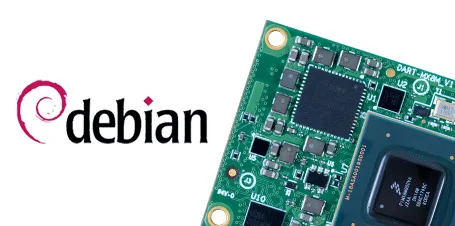
- New Release: Debian Buster v3.1 for DART-MX8M modules
Release date: 12/16/2020
Variscite is pleased to inform about the Debian Buster v3.1 release for the DART-MX8M System on Module.
Modules: DART-MX8M
Release: mx8m-dart-debian-buster-sd.v31
Details:
- Filesystem:
Debian Buster - Linux kernel:
Variscite imx_4.19.35_1.1.0_var01 branch (based on official NXP release 4.19.35_1.1.0, which is based on Linux 4.19.35). - U-Boot:
Variscite imx_v2019.04_4.19.35_1.1.0-var01 branch (based on official NXP release 4.19.35_1.1.0, which is based on U-Boot v2019.04).
Noteworthy updates since release v2.3:
Release 3.1
- Updated bc43xx Bluetooth/Wi-Fi firmware to Laird release 8.2.0.16
Linux kernel updates: - Updated VDD_GPU voltage – this solves GPU instability issues seen on a small percentage of SOMs
- MLK-22694: arch64: dts: fsl-imx8mq: Move src for dsi nodes and add lcdif clock
- MLK-22694: imx: nwl_dsi-imx: Move mipi resets for i.MX8MQ
Release 3.0
U-Boot updates:
- Update to 2019.04_4.19.35_1.1.0 branch
Linux kernel updates: - Update to 4.19.35_1.1.0 branch
- Dual Display Support – LVDS, LVDS + DP, LVDS + HDMI combination supported
Debian build updates: - Align mx8_install_debian.sh to latest mx8_install_yocto.sh
- Rename imx8m-var-dart machine to imx8mq-var-dart
- Multimedia gstreamer packages updated to 1.16 version
- GPU SDK support
- Updated bc43xx Bluetooth/Wi-Fi firmware to latest release 7.0.0.142
- Power management updates
- Building imx-atf from source code
External Information
Release notes
Developers info

Sign up for our newsletter


 Join RSS Feed
Latest Posts
Software releases
Stay current with software updates – Keep your Variscite SoMs performing at their best with our latest software releases.

Newsroom

Adding TPM 2.0 to an embedded product usually starts with a hardware question: where does the security chip go? On Variscite’s i.MX-based modules, there is now another answer. Variscite and SecEdge are bringing SecEdge’s TPM 2.0 firmware, anchored in the processor’s own security hardware, to Variscite’s i.MX System on Module portfolio.
Blog
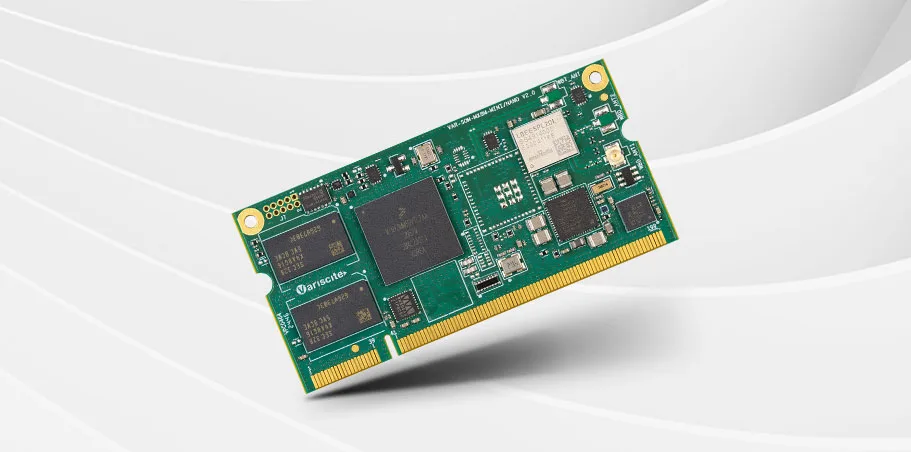
Pierluigi Passaro, Variscite’s R&D expert, introduces the VAR-SOM-MX8M-MINI and the VAR-SOM-MX8M-NANO – two cost-optimized modules designed for applications that require power-efficient processing, graphics capabilities, and real-time performance. Both SoMs are available with flexible memory, storage, and wireless configurations, allowing developers to pay only for the features they need.
