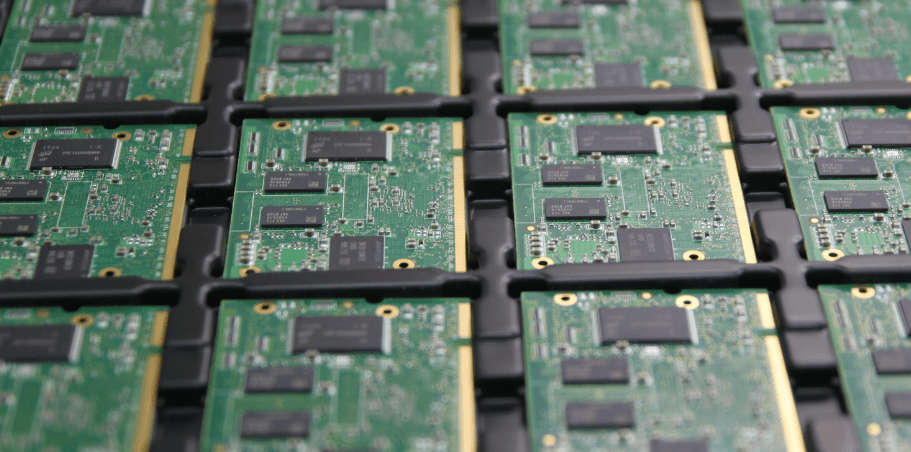
Variscite’s new low-power and compact SoM based on NXP/Freescale i.MX 6UltraLite is launched at only 27 USD.
Variscite once again sets a new market standard, introducing the DART-6UL, measuring only 25mm x 50mm. This highly flexible System-on-Module (SoM) is based on NXP/Freescale’s i.MX 6UltraLite family and carries a 528MHz ARM Cortex-A7™ processor. A versatile platform, the DART-6UL provides a variety of interfaces and connectivity options – all packaged at an optimized power, size and cost.

In addition, the system supports industrial grade targeting embedded application requiring a wide temperature range. The VAR-6ULCustomBoard carrier board complements an attractive full reference kit of the DART-6UL SoM, which can be used for customers’ evaluation, development and end-product mass production.
DART-6UL main features include:
- Small size: 25mm x 50mm x 4mm
- NXP/Freescale i.MX 6UltraLite 528MHz ARM Cortex-A7 with optional security features
- Up to 512 MB DDR3L and 512 MB NAND / 32 GB eMMC
- Certified WiFi 802.11 b/g/n
- Bluetooth 4.1/BLE
- Dual 10/100Mbps Ethernet
- 2D Pixel acceleration engine
- Display: 24-bit parallel RGB up to WXGA
- Touch screen controller
- Dual USB 2.0 OTG (Host/Device)
- Audio In/Out
- Dual CAN, UART, I2C, SPI, PWM, ADC
- Parallel camera input
- Industrial temperature grade
- OS: Linux Yocto

Variscite also offers a fully featured, touchscreen-enabled VAR-6ULCustomBoard Carrier. It serves as a complete development kit for evaluation and application development. It interfaces with a 7″ capacitive touchscreen.

VAR-6ULCustomBoard – SBC and development kit


 Join RSS Feed


Variscite, a leading System on Module manufacturer with proven expertise in medical applications, has joined forces with NRG, an engineering firm specializing in regulated medtech systems, to deliver an integrated hardware-software solution for companies building embedded medical products. The partnership gives development teams access to both a proven hardware platform and the software and engineering capabilities needed to support regulated development goals and product readiness.