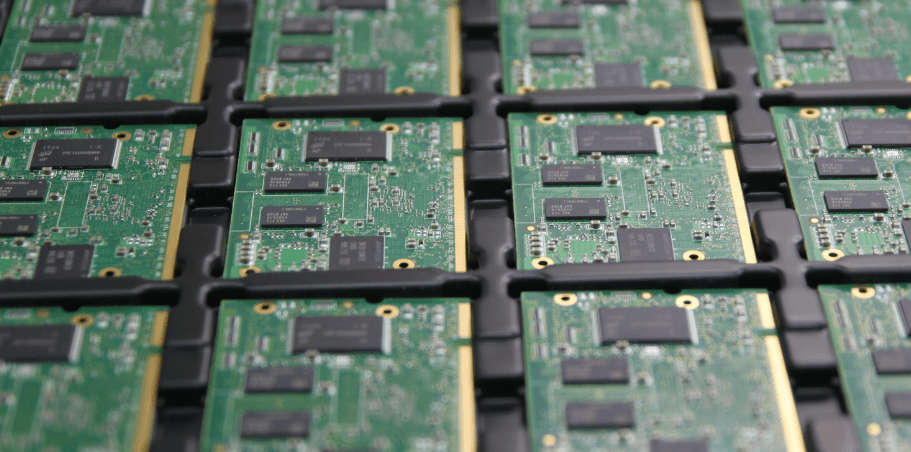
A New Cost-Effective SoM based on the Texas Instruments AM62x processor – Starting from only $33
Variscite is pleased to announce the launch of the new VAR-SOM-AM62 System on Module / Computer on Module, based on the Texas Instruments (TI) AM62x processor. Starting from only $33, the SoM provides an ideal high-performance, power-sensitive solution for embedded industrial products.

Compatible with the VAR-SOM Pin2Pin product family, the VAR-SOM-AM62 expands Variscite’s pin-compatible portfolio with an optimized power consumption solution that presents high CPU performance and graphics capabilities. Variscite’s customers also enjoy extended availability and advanced scalability options from entry-level to high-performance modules.
“The integration of the AM625x processor into the VAR-SOM-AM62 gives developers a solid foundation that combines performance and power efficiencies,” said Ofer Austerlitz, VP Business Development and Sales of Variscite. “These qualities, along with integrated interfaces, generate a very attractive cost-optimized solution for present-day embedded edge devices.”
The VAR-SOM-AM62 System on Module Features
The SoM runs on a TI AM625x processor featuring a 1.4GHz Quad Cortex®-A53 CPU, a 400MHz Cortex-M4F, and 333MHz programmable real-time co-processor. It supports 3D graphics acceleration, two LVDS displays, MIPI-CSI2 camera interface, and industrial connectivity features such as certified single or dual-band WiFi, Bluetooth/BLE 5.2, 3x CAN bus, dual GbE along with industrial operating temperatures.

Evaluation Kits and Availability
The VAR-SOM-AM62 evaluation kits include the scalable Symphony carrier board and an optional LVDS display with a touch panel. Evaluation kits and stock item modules are already available for orders in production quantities, starting from only $33 per unit.

For further information, please contact our sales team.


 Join RSS Feed

Variscite, a leading System on Module manufacturer with proven expertise in medical applications, has joined forces with NRG, an engineering firm specializing in regulated medtech systems, to deliver an integrated hardware-software solution for companies building embedded medical products. The partnership gives development teams access to both a proven hardware platform and the software and engineering capabilities needed to support regulated development goals and product readiness.