


- Home
 System On Module
- Qualcomm Snapdragon 410
- DART-SD410 Qualcomm Snapdragon 410
DART-SD410
Qualcomm Snapdragon 410
The DART-SD410 is based on the Qualcomm Snapdragon 410 (APQ8016), 1.2 GHz quad-core Cortex-A53™ processor. The DART-SD410 offers the perfect combination of high performance and low power consumption, packed in a tiny 25x 43 mm package. This unique combination makes this System on Module / Computer on Module an ideal solution for portable, battery-operated devices as well as multimedia intensive applications. The DART-SD410 highly integrated connectivity includes WiFi/Bluetooth, GPS, USB, and A/V interfaces. Furthermore, the system supports full -25 to 85c operating temperatures.


Highlights

CPU
1.2GHz Quad Cortex™-A53 Qualcomm Snapdragon 410

Dimensions
Only 42 x 25 mm

Certified WiFi/Bluetooth
802.11 b/g/n and 4.1 EDR + BLE

Temperature range
-25 to 85°C

Multimedia
GPU, 1080p30 Video Acceleration

Product Longevity
2024

Power Consumption
Only 4 mA in suspend

Support
Supporting you every step of the way - from ideation to launch and beyond.
Free and prompt support directly from Variscite’s R&D experts.
Quick Links


Specifications
CPU Name
Qualcomm Snapdragon 410 (APQ8016)
CPU Type
Cortex™-A53
CPU Cores
4 Cores
CPU Clock (Max)
1.2 GHz
Integer performance (DMIPS)
Up to 11,040
RAM
1024 - 2048 MB LPDDR3
eMMC
8 - 16 GB
Multimedia
2D/3D Graphics Acceleration
Adreno 306 Accelerated 2D and 3D
Video Encode / Decode
1080p30 H.264 Encode / Decode
Camera Interfaces
Dual MIPI CSI up to 13Mpixel
Display
HDMI
On-Carrier (via bridge)
LVDS
On-Carrier (via bridge)
DSI
1920 x 1080, 24bits
Touch controller
Capacitive
Audio
Headphone driver
Yes
Microphone
Digital, Analog
Line In/Out
Speaker
Connectivity
SD / MMC
x1
USB Host / Device
USB 2.0 : 1x OTG
UART
x2, up to 4 Mbps
I2C
x6
SPI
x6
RTC
On carrier
Networking
Ethernet
10/100/1000 Mbps - On-Carrier (via bridge)
WiFi
802.11 b/g/n
Bluetooth
4.1 EDR + BLE
Linux
Yocto, Debian
Android
Yes
Mechanical Specifications
Dimensions (W x L)
42 x 25 mm
Electronic Specifications
Supply voltage
3.7 - 4.5 V
Digital I/O voltage
1.8 V
Environmental Specifications
Extended operating temperature
-25 to 85°C
Storage temperature
-40 to 85°C
Storage humidity
5% to 95%


DART-SD410_[xxxxR_xxG]_[WB]_[GP]
[xxxxR_xxG]
RAM / eMMC Capacity:
[1024R_8G]: 1024 MB LPDDR3 and 8GB eMMC
[2048R_16G]: 2048 MB LPDDR3 and 16 GB eMMC
[1024R_8G]: 1024 MB LPDDR3 and 8GB eMMC
[2048R_16G]: 2048 MB LPDDR3 and 16 GB eMMC
[WB]
WB: Built-in WiFi 802.11 b/g/n + Bluetooth 4.1/BLE
[GP]
GPS


Our Long-Standing Partnerships
Our close partnerships with leading technology vendors provide our customers with early access to the latest advanced solutions, ensuring your projects begin with a solid and future-ready foundation.


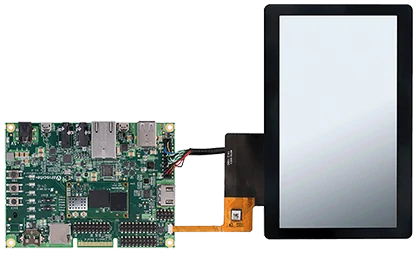
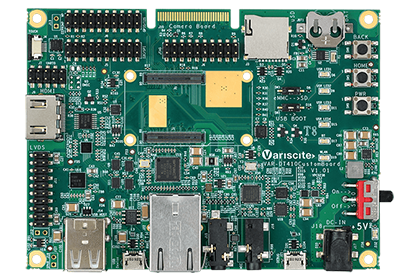
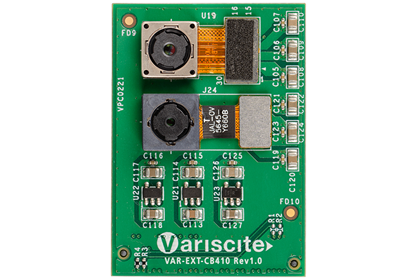
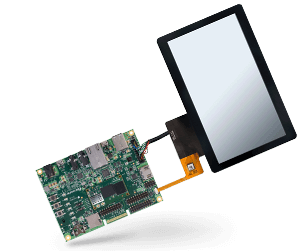
Evaluation Kit
DART-SD410 Evaluation Kits



Get Your Custom Quote
Fill out the details below and one of our
representatives will contact you shortly
representatives will contact you shortly

Why Variscite?

Quality
In-house manufacturing with comprehensive quality control - certified to ISO9001 and ISO13485 medical standards.

Pin2Pin
Our Pin2Pin product families maximize scalability and enable seamless migration to future technologies without redesigning the carrier board.

Longevity
15-year guaranteed hardware availability, backed by continuous software updates and support.

Customizability
Configure your system with precision and flexibility - select only the features you need and reduce costs.
Updates

 09.10.2024
 Software releases

Stay current with software updates – Keep your Variscite SoMs performing at their best with our latest software releases.
16.06.2026

Newsroom

Global component shortages are putting embedded projects under pressure. As a leading global System on Modules (SoMs) developer and manufacturer, we keep our customers’ development timelines on track by applying a supply chain strategy built on buffered inventories, in-house production, established relationships with multiple suppliers, and more than two decades of operational experience.
As AI-driven demand accelerated through 2025, memory chip shortages developed as semiconductor manufacturers shifted capacity to large-volume buyers, leaving many sectors, including medical, industrial, edge/IoT, and robotics poorly served. Climbing prices and lengthening lead times, exacerbated by knock-on effects across other SoM components, have created two clear pressure points. SoM vendors relying on outsourced manufacturing have limited flexibility when availability drops, leaving customers facing the same delays. Separately, product developers who chose chip-down architectures over SoM-based designs must procure components on their own. Those buying in smaller quantities are routinely pushed down supplier priority lists, and in many cases cannot get supply at all.
As AI-driven demand accelerated through 2025, memory chip shortages developed as semiconductor manufacturers shifted capacity to large-volume buyers, leaving many sectors, including medical, industrial, edge/IoT, and robotics poorly served. Climbing prices and lengthening lead times, exacerbated by knock-on effects across other SoM components, have created two clear pressure points. SoM vendors relying on outsourced manufacturing have limited flexibility when availability drops, leaving customers facing the same delays. Separately, product developers who chose chip-down architectures over SoM-based designs must procure components on their own. Those buying in smaller quantities are routinely pushed down supplier priority lists, and in many cases cannot get supply at all.
21.06.2026
Blog

Your OS Decision Matters
29.04.2026
